
Sketching Autumn Alleys: How to Capture Wet Cobblestones and Warm Light
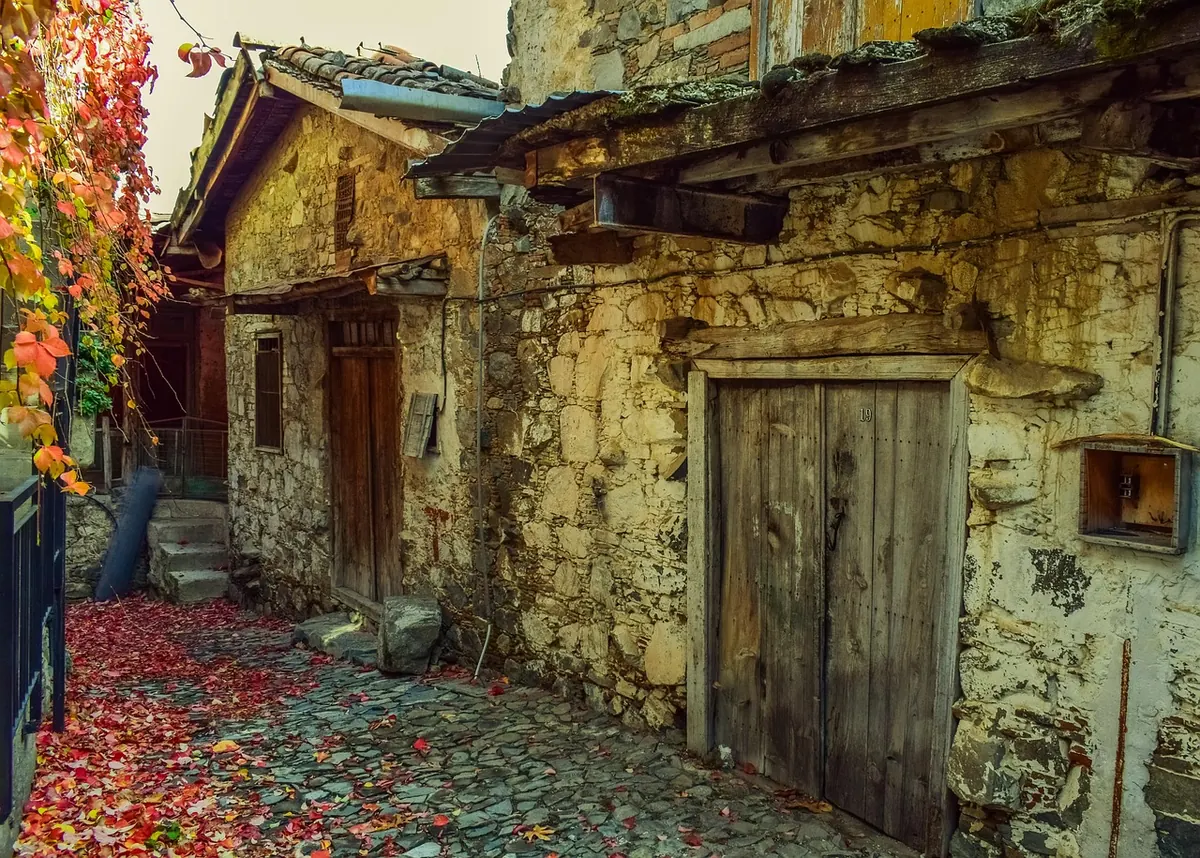
The first cold rain of October changes a narrow street more than any summer afternoon can. Cobbles go dark, gutters start to shine, and every lit window lays a second, wobbling copy of itself on the ground. For a sketcher, that is the moment the alley stops being a backdrop and becomes the subject.
Autumn gives you two things at once: reflective pavement and warm light. The trick is that they depend on each other. Without wet stone, the low sun has nothing to bounce off; without that amber light, the puddles are just grey. Here is how to get both onto the page before the weather changes its mind.
What wet stone actually does to a scene
Dry cobblestones sit at a comfortable middle value. Wet ones drop several steps darker, almost to the value of the shadows between them. That drop is a gift, because it turns the street into a low, imperfect mirror — and a mirror gives you something a dry street never does: repeated shapes.
Two rules keep those reflections believable. First, they are weaker than the thing reflected: darker, softer at the edges, and usually a little warmer or cooler than the original depending on the light. Second, they are broken. Cobble joints, manhole covers, a drift of fallen leaves, a dry patch under an overhang — all of these interrupt the image. A reflection that runs unbroken from wall to wall looks like glass, not stone.
Watch the angle, too. Reflections stretch toward you when you stand low and compress when you stand tall. Crouch for a moment before you commit to a composition; the street will reorganise itself, and the long vertical smear of a lamp or an arched doorway will suddenly line up with the shape of your paper.
Three kinds of autumn light
Autumn light is not one thing. In an alley it arrives in narrow slices, and each slice asks for a different approach.
After the rain, before the sun
This is the softest and most forgiving hour. Values are compressed, colours are saturated, and there are no hard shadows to chase. Work in flat washes and let the wet pavement carry the picture. Your darkest note should be the stone itself or a doorway interior, not a shadow cast by a building — there may not be one.
The low golden hour
When the sun drops low enough to clear the rooftops, one wall lights up and the other falls into cool shade. That contrast is the whole point of autumn sketching. Note where the warm band lands: often it is only the upper third of a facade, or a stripe across the pavement where a gap between buildings lets the light through. Put that stripe in early, while it is still there. It will move.
Blue hour and shop windows
Twenty minutes after sunset the alley goes blue and the windows go orange. This is when reflections finally outshine their sources: a lit window in a dark facade is a modest square, but stretched across wet cobbles it becomes a long, generous column of colour. Work small, work fast, and accept that you are drawing light rather than architecture.
Reflections: an order of work
Reflections go wrong when they are treated as detail. Build them as structure instead, in this sequence:
- Set the value of the wet stone first. Lay a broad, mid-dark wash over the pavement and leave bare paper where the brightest reflection will sit. Deciding the lightest note early stops the street from turning to mud.
- Block the reflection as one shape. Not a copy of the building, but a simplified silhouette — a tapering column, a bent rectangle, a soft triangle where a roof meets a puddle.
- Break it up. Drag a few dry-brush strokes across it, or lift colour along the cobble joints with a thirsty brush or a corner of tissue. Horizontal interruptions read as paving; vertical ones read as smears.
- Keep the verticals honest. Reflections drop straight down from their source. If a doorway is at the left edge of the drawing, its reflection belongs directly beneath it, even if the puddle seems to lead elsewhere.
- Save warm accents for last. One or two touches of amber in the puddles will do more than twenty.
A palette for damp grey and warm accents
Wet weather is not colourless; it is full of grey, and grey is a decision. Mix two: a cool one from ultramarine and burnt sienna, and a warmer one from the same pair pushed toward the sienna. Use the cool grey in shade and the warm grey where light grazes a wall. Keeping them separate on the palette, rather than muddling one average grey, is what makes a damp alley look atmospheric instead of merely dim.
Then choose your warm notes deliberately. Two per drawing is usually enough: a lit window, a coat, a stripe of ochre on a shutter, a sagging awning, the press of leaves in a gutter. Cadmium orange or vermilion next to a cool grey will sing; the same colour scattered everywhere will cancel itself out. If you work in watercolour, remember that the light hitting wet stone is often warmer than the object casting it, so a warm reflection under a cool facade is not a mistake.
One more useful habit: leave the brightest paper untouched. In an autumn alley the lightest thing is rarely the sky. It is a reflection, a window, or the wet edge of a kerb.
Composing inside a narrow space
Alleys are vertical rooms. Turn the paper to portrait and let the facades press in from both sides. Rather than centring the far end of the street, push the vanishing point off to one side and give three-quarters of the width to the wall that holds the light. A doorway, a drainpipe, a stack of crates or a parked bicycle gives the eye a place to stop on the way in; without one, the drawing becomes a corridor with nothing in it.
Include a figure if you can, even a small one, seen for three seconds and drawn from memory. Scale is difficult to judge in a narrow street, and a single passer-by settles it instantly. If the alley is empty, a sliver of sky at the top will do the same job by giving the buildings a height to be measured against.
When the weather turns while you are drawing
Autumn sketching means being interrupted. Keep the kit small enough to hold in one hand and finish in twenty-five minutes: a sketchbook that lies flat, a waterproof pen, a travel palette, one brush, a water container with a lid. Waterproof ink matters more than people expect — a sudden shower will lift soluble linework into a grey haze.
Find shelter before you start: an awning, a recessed doorway, the overhang of a shop. Work in pencil first if the light is moving quickly, and put the wash in later from a thumbnail of values. Fingerless gloves let you draw in the cold. And if the rain settles in properly, turn the page and draw the thing in front of you — the wet street from a café window is still an autumn alley.
A short practical checklist
Before you close the sketchbook, ask yourself four questions. Is my darkest note in the pavement rather than in a shadow? Have I left bare paper for the brightest reflection? Are there no more than two warm accents? Did I break the reflection with at least three interruptions?
If the answer to all four is yes, the drawing will hold up. Autumn alleys reward a short, alert session over a long, comfortable one — the light you came for lasts about forty minutes. Sketch the bones, catch the shine, and let the weather finish the mood.